
Dating and social signals
How Your Instagram Presence Affects Your Dating Pool
A dating pool estimate counts how many people plausibly meet your standards. It cannot count how many of them keep going after they open your profile. Instagram has become the step between matching and meeting, and it changes conversion, not supply. This guide explains what a grid, a caption, and a following list actually signal — and how to audit yours privately without turning your life into a numbers game.
The short answer
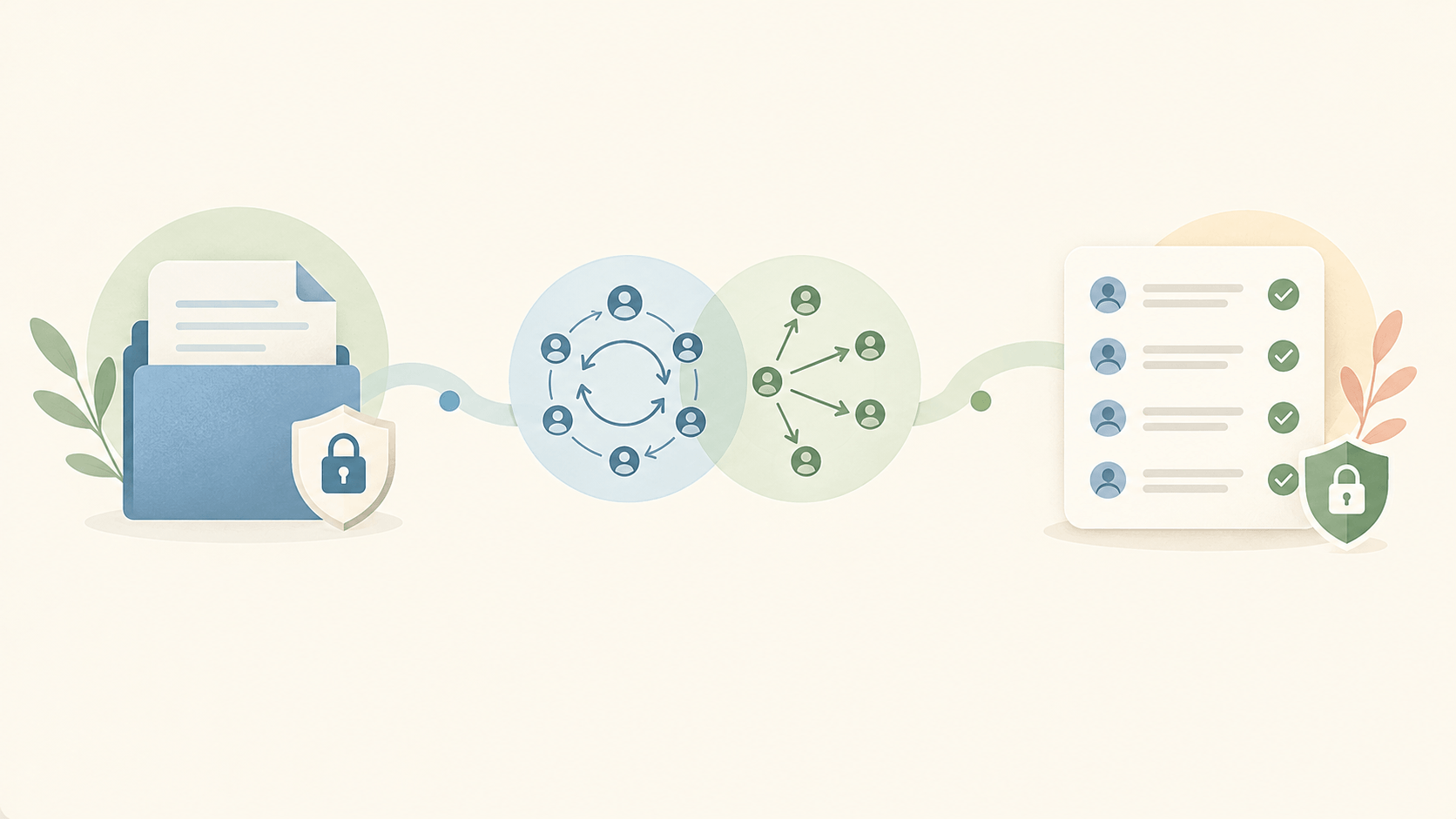
Instagram does not change how many compatible people exist. It changes how many of them act. A clear, consistent, honest account lowers the cost of trusting a stranger; a cluttered or contradictory one raises it. The goal is not a more impressive life — it is a more legible one.
This matters because most dating advice treats the profile as a finishing touch. In practice it is a conversion step. Two people can sit in the same dating pool and get very different results because one of them is easier to read than the other.
The rest of this guide separates what a profile genuinely signals from what people assume it proves, and then shows a private, evidence-based way to review the one surface most people never look at: who you follow, and who follows back.
Why people look you up before they meet you
Online dating starts introductions at scale. Pew Research Center’s 2023 survey found that 30% of U.S. adults have used a dating site or app, rising to 53% among adults under 30. But an introduction is not a decision. Between “we matched” and “we met” sits a screening step that almost everyone performs: looking the other person up.
That screening step is where social media enters the picture. A match opens your profile, reads a few captions, and forms a fast impression about whether you are the kind of person they want to spend an evening with. Research on social media impressions supports what most daters already suspect: viewers form stable judgments about personality and emotional tone from a profile quickly, and from limited information.

This is the same distinction we draw in what a dating pool estimate misses: the number describes demographic overlap, not the series of human decisions that follow. A profile is one of those decisions, and it is one you can actually control.
What your account actually signals
A profile is not a single image. It is four separate surfaces, and each one answers a different question a date is quietly asking.
The grid
A selection of moments, not a record of a life.
Your grid communicates tone, consistency, and interests before anyone reads a single caption. It is a curated sequence, so a date learns what you chose to show — which is itself information about your judgment and taste.
Captions and comments
How you talk about other people is the most legible value signal.
The way you describe friends, exes, colleagues, and strangers is read closely. Warmth, contempt, and humor all travel through text. This surface is harder to curate than a photo, which is exactly why it carries more weight.
The following list
Public by default, and read as a statement of attention.
Who you follow shows where you spend attention. A following list dominated by one narrow interest, or by accounts you would not want associated with you, tells a story you did not intend to write.
Reciprocity
Whether the accounts you follow follow you back.
Reciprocity is the quietest signal and the most diagnostic. It is the social version of mutual interest — and it is countable, which makes it useful for an honest review.
Read together, these surfaces answer one question: is this person consistent? Consistency is not the same as perfection. A messy, funny, obviously real account can be far more trustworthy than a polished one that reads like a brand.
The one-sided relationship problem
The central friction in dating is asymmetry. You meet someone’s standards but they do not meet yours, or you invest while they stay lukewarm. A match that stalls is usually not a supply problem; it is a reciprocity problem.
Instagram makes that asymmetry countable. An account you follow that does not follow you back is a one-way relationship, visible to anyone who cares to look. On its own, that means very little — you follow creators, brands, colleagues, local businesses, and people you admire. But a following list that is dominated by one-way attention tells a story that may not match the mutual, reciprocal connection you say you are looking for.
This is the same trap we describe in filtering for a proxy instead of the real need. Your following list is a proxy. The need it points at is reciprocity. Treating the proxy as the goal produces the familiar error: unfollowing people to make a number look better, while the underlying pattern stays exactly the same.
The useful question
Not “how many people do not follow me back?” but “does the attention I actually give match the relationship I say I want?” That question survives a follower-count update. The other one does not.
Consistency is the trust signal, not polish
Most people’s stated standards emphasize respect, reliability, and intention. The interesting question is whether those values are legible in how they behave in public — including on an app where every action is timestamped and permanent.
When a profile contradicts its owner, dates register the gap long before they can articulate it. A person who says stability matters but posts in a way that reads chaotic, or who describes themselves as private while maintaining a fully public account, creates friction that no caption can smooth over.
Curation is not the same as faking. Choosing which moments to publish, writing captions that sound like you, and removing things that no longer represent you is editing — and editing is what makes a signal readable. The line to hold is simple: never claim a life you do not have. Every other kind of cleanup is fair.
A working definition
A good dating profile is not the most attractive version of you. It is the most accurate one — attractive enough to open the door, accurate enough that the person behind it survives the comparison.
A private, evidence-based audit of who you follow
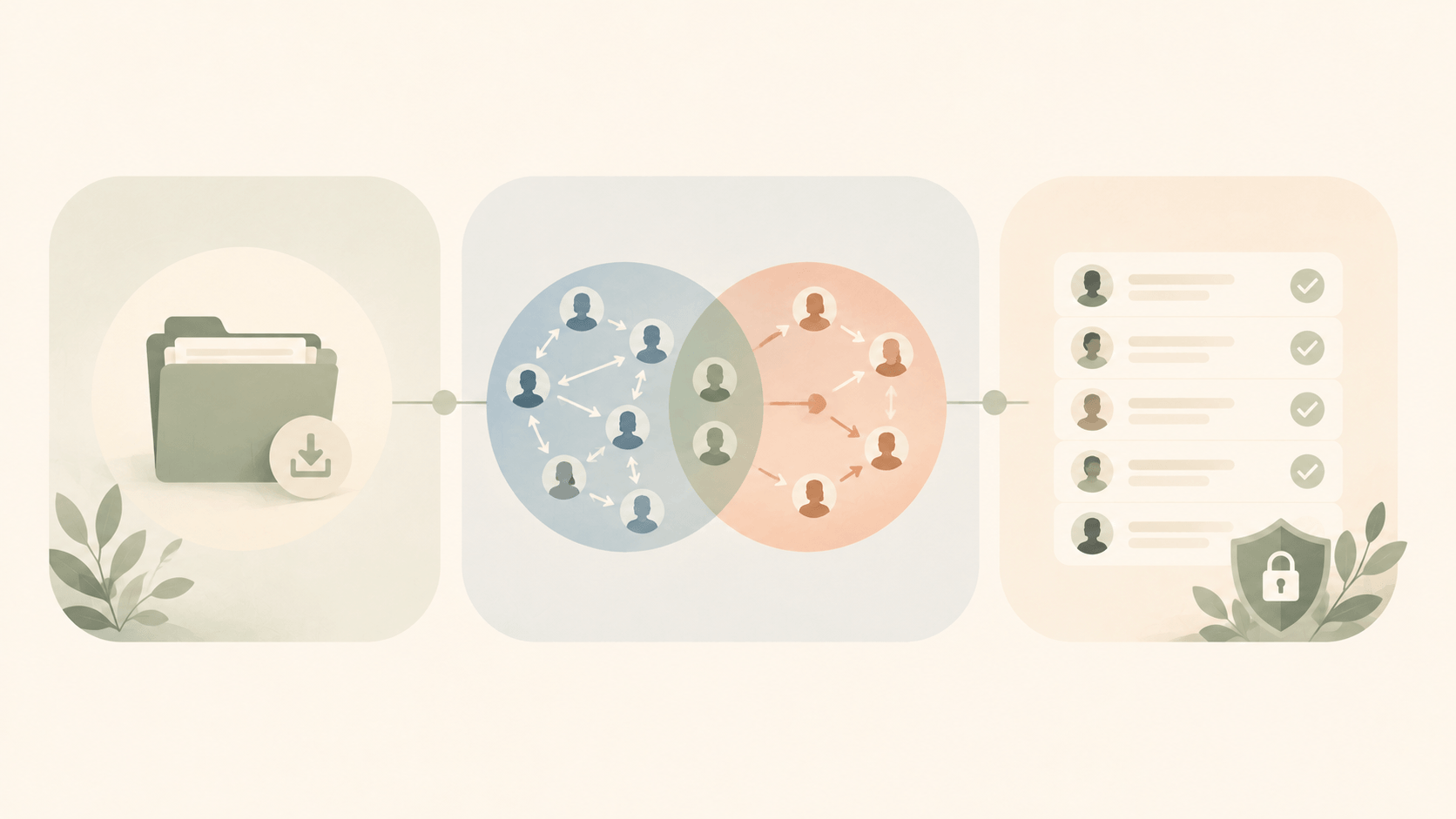
If you want to check the reciprocity surface honestly, the only reliable source is your own data. Instagram lets you request an export of your followers and following lists. Comparing those two files gives you a factual list of one-way follows instead of a guess based on scrolling.
Request your own export
In Instagram’s Accounts Center, request a download of your information and include the followers and following categories. Choose JSON or HTML, then keep the ZIP compressed.
Compare the two files, privately
A username that appears in your following list but not in your followers list is a one-way follow in that snapshot. Use a tool that opens your ZIP locally in the browser instead of asking for your password or connecting your account.
Review with judgment, not outrage
Keep the exceptions: creators you learn from, brands you genuinely use, colleagues, and old friends. The goal is signal, not a lower number. A following list is allowed to be interesting.
Export a slower worklist
Save the result as a CSV so you can revisit it over a few sessions. Bulk unfollowing in one sitting is how people lose accounts they later wanted to keep.
Change one thing at a time
Apply the same discipline the dating standards calculator asks of you: adjust one variable, observe the effect, and only then decide whether the change was worth making.
For step two, the important property is how the tool handles your data. Instagram Cleaner compares the followers and following files from your own export directly in your browser. It does not ask for your password, does not connect to your account, and does not unfollow anyone for you — it returns a review list and a CSV, and leaves every decision to you. That combination is what makes it usable as an audit rather than a risk.
If you want the fuller walkthrough of reading the result and handling the edge cases, Instagram Cleaner documents the process in its guide to seeing who does not follow you back, including what each file inside the export actually contains.
Be careful with tools that want more than a file
Any service that asks for your Instagram password, logs in on your behalf, or automates unfollowing puts your account at risk and can violate platform rules. A private export review avoids the whole category of problem: you are reading data you already own, on your own machine.
What your Instagram cannot tell a date
It is easy to over-read a profile in both directions — to assume a polished account means a good person, or a sparse one means a dull one. Neither follows. The honest list of what social signals cannot show is longer than most people expect.
- A grid is a selection, not a life. It cannot show availability, kindness, or consistency over time.
- A following list records attention, not character, and it changes constantly.
- A reciprocal follow is not proof of mutual romantic interest.
- A polished account is not evidence that someone will treat you well.
- Follower counts, likes, and ratios do not predict relationship outcomes.
This is why the calculator on this site reports a range rather than a verdict, and why we keep returning to the same principle: a number can make a trade-off visible, but it cannot make a decision for you. The same restraint applies to social signals. Use them to reduce noise, not to replace judgment.
How this connects to your dating pool estimate
The two pieces fit together cleanly. A dating pool estimate tells you how many people plausibly meet your standards — the supply side. Your social presence influences how many of those people convert into an actual conversation, date, and second date — the conversion side.
| Funnel stage | What drives it | What you can change |
|---|---|---|
| Meets your standards | Demographics and overlap | Your standards and search area — test them in the calculator |
| Looks you up | Curiosity and social vetting | Almost nothing — but you control what they find |
| Decides to engage | First impression, tone, consistency | Your grid, captions, and reciprocity signals |
| Keeps investing | Behavior over time | Nothing a profile can fix |
Stage 1
Meets your standards
Stage 2
Looks you up
Stage 3
Decides to message
Stage 4
Meets in person
Stage 5
Keeps investing
If your estimate says a pool is large but your experience feels narrow, the bottleneck is probably not supply. It is one of the later stages — and the later stages are the ones you influence. Two related reads: how to expand your dating pool covers access, while the signs of emotional availability covers what to look for once you reach the last stage.
Measure the supply, then improve the conversion
Start with an honest estimate of your dating pool, then treat your public profile as the conversion step it has become. Keep the standards that protect you, remove the noise that makes you hard to read, and never mistake a cleaner number for a better outcome.
Estimate your dating poolInstagram and dating FAQs
Does Instagram actually affect your dating pool?
It does not change how many people meet your standards, but it changes how many of them follow through. A dating pool estimate counts demographic overlap; a profile decides whether someone keeps investing after they look you up. A clear, consistent account lowers the cost of trusting a stranger.
Should I unfollow everyone who does not follow me back?
No. Plenty of one-way follows are intentional — creators, brands, colleagues, local businesses, and accounts you follow for research. The point of a review is not to punish non-reciprocity. It is to check whether your following list still reflects the reciprocal, mutual connection you say you want.
Is it safe to use an Instagram cleaner tool?
It depends entirely on what the tool asks for. A tool that requests your password, logs into your account, or unfollows on your behalf carries account and privacy risk. A safer approach reads the export file you already downloaded, processes it in your own browser, and leaves every decision to you.
What does a public following list reveal about me?
By default, anyone can see who you follow. That list is a record of where you direct attention, and it is read as a signal of taste, values, and interests. It is not a verdict on your character, but it is public information that a date may interpret without context.
How often should I review my Instagram following list?
Once or twice a year is enough for most people, or before a period when you know new dates will be looking you up. Treat it like a wardrobe review, not a daily metric. Frequent unfollowing churn is not a dating strategy.
Sources and notes
This article separates three kinds of claim: published survey data, peer-reviewed research on impression formation, and practical guidance from our own experience maintaining this calculator. Where a claim is a judgment rather than a measurement, it is framed as one.
A note on what the data supports
The survey figures below describe U.S. adults and their use of online dating. They do not measure how much a profile changes a specific person’s outcome, and no dataset we are aware of isolates that effect cleanly. The research on impressions supports the narrower claim that people form fast, stable judgments from limited profile information — not that any particular editing choice will improve your dating results.
- Pew Research Center: Key findings about online dating in the U.S. — nationally representative survey data on dating app use and experiences (2023).
- Pew Research Center: The Experiences of U.S. Online Daters — full report and methodology behind the figures cited above.
- Media Psychology: Emotional expressions and first impression formation in social media profiles — experimental evidence on how viewers judge profiles quickly.
- Instagram Cleaner — a browser-based tool for comparing the followers and following files in your own Instagram export.
Bottom line
Instagram is not the reason dating feels hard, and cleaning up an account will not find you a partner. But the profile has quietly become the step between meeting someone’s standards and actually meeting them. Treat it as part of the funnel: make yourself legible, keep your public attention consistent with the relationship you say you want, and use your own data — not a stranger’s guess — when you decide what to keep.