
Dating tools guide
Calculator vs Standards Test: Which One Fits Your Dating Search?
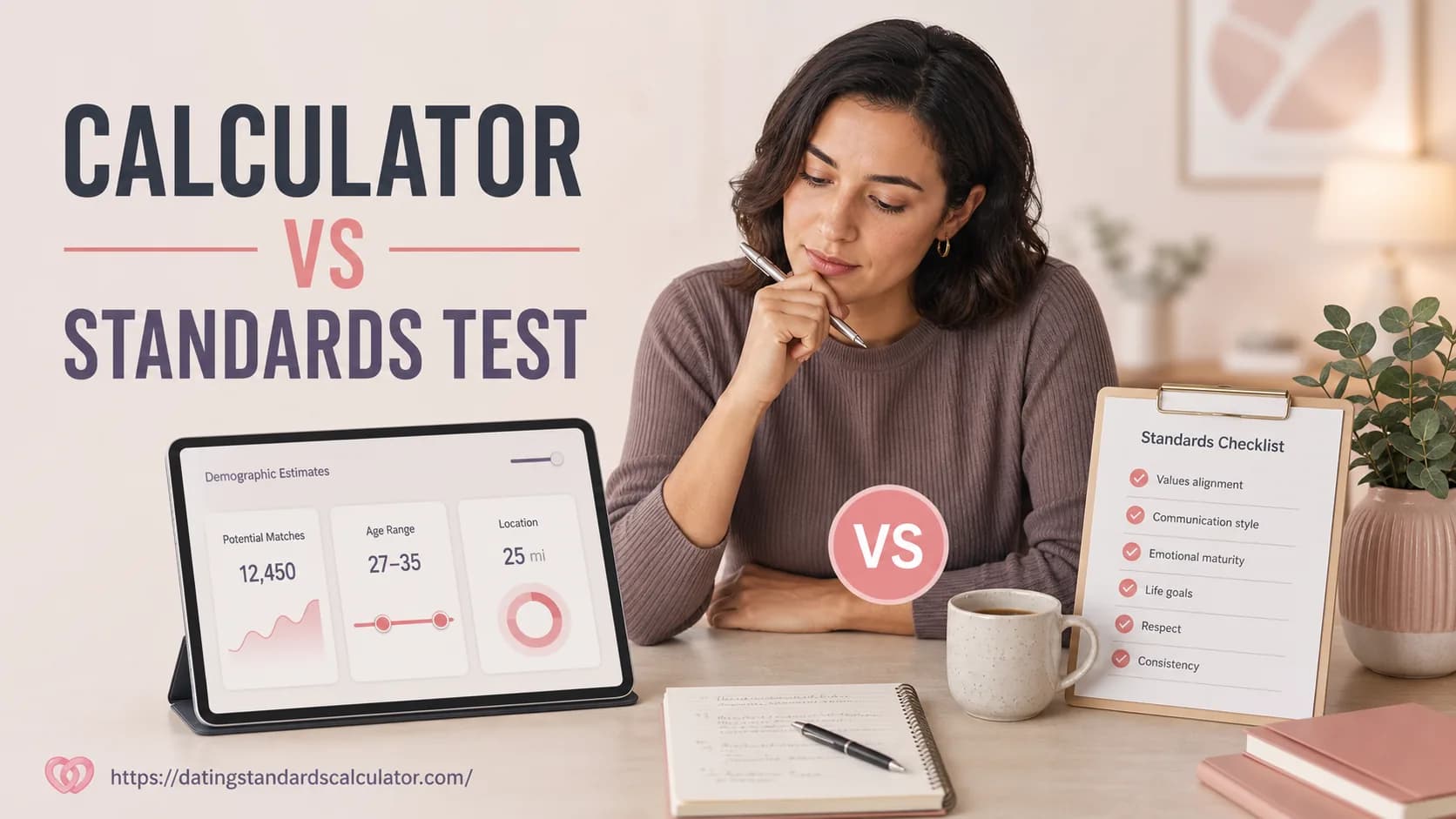
A calculator, a standards test and a quiz can sound similar, but they should not answer the same question. The useful distinction is simple: use a broad planning tool to explore measurable overlap, and use focused tests when your question is already narrower.
The quick answer
Choose a calculator when you want to change inputs and see how measurable filters interact. Choose a standards test when you want a more guided check around a specific dating question. Both can be useful, but neither should be treated as a final judgment about your value, attraction or future relationship success.
If you are still exploring the whole dating pool question, start with the main planning calculator. Men reviewing their priorities for a female partner can use the focused standards test for men is the cleaner fit. If you are estimating a search for women, use the Female Partner Calculator for the direct interactive estimate.
What is a dating standards test?
A dating standards test is a guided assessment for turning a broad idea such as “my standards” into a smaller set of questions you can examine. Depending on the page, it may ask about age, height, income, education, location, relationship status or other stated preferences.
The useful part is the structure. A good test distinguishes measurable filters from values and lifestyle expectations, shows which inputs affect the estimate, and explains what the result leaves out. It should help you compare scenarios rather than hand you a score that claims to define your future.
Define the question
Decide whether you are checking search breadth, reviewing your priorities or comparing a specific audience.
Show the inputs
Keep the criteria visible so you can see which change caused the range to move.
State the limits
Treat demographic overlap as planning context, not proof of attraction, availability or compatibility.
What does a dating standards test measure?
The label alone does not tell you what a website measures. Some tests are preference checklists, while others combine selected filters into a numerical estimate. Before comparing two results, check whether they describe the same population and use the same assumptions.
On DS, a supported country result starts from a national demographic benchmark and applies visible planning factors for age, optional height, income and search area. City adjustments and lifestyle weights are model assumptions; they are not measurements of how many local people share your values. An unsupported country receives preference analysis instead of a population percentage.
A percentage also needs a denominator: 5% of a national reference population and 5% of a local search population describe different groups. Our guide to percentages and estimated population counts explains that distinction. Neither number tells you who is actively dating, mutually interested or compatible with you.
Calculator or standards test?
Best use
A broad planning view of how measurable filters combine.
A narrower guided check for a specific standards question.
Search intent
The user wants to adjust inputs and see a demographic range.
The user wants a simpler reality check or a themed assessment.
Output
A transparent estimate range with visible assumptions.
A focused result framed around one audience or question.
Risk to avoid
Treating a population estimate as personal destiny.
Treating a quiz-style answer as scientific proof.
How to use a standards test website
Start with the audience and question that match your real search. People looking for women can use the Men Standards Test or the more direct Female Partner Calculator. People looking for men can use the Women Standards Test.
- 1
Enter only standards you would actually apply when deciding whether to meet someone. Adding every possible preference makes the result harder to interpret.
- 2
Record a baseline, then change one filter at a time. For example, widen the age range while keeping height, income and location fixed. This shows what the change contributes within the model without mixing several effects together.
- 3
Check the population definition and the evidence behind the estimate. The site's methodology page explains those assumptions in detail.
- 4
Review the result alongside your must-haves and flexible preferences. A larger range is not automatically a better choice if the change removes a boundary tied to safety, respect or shared life goals.
A simple way to choose
Start with the question you are trying to answer, not the label on the tool.
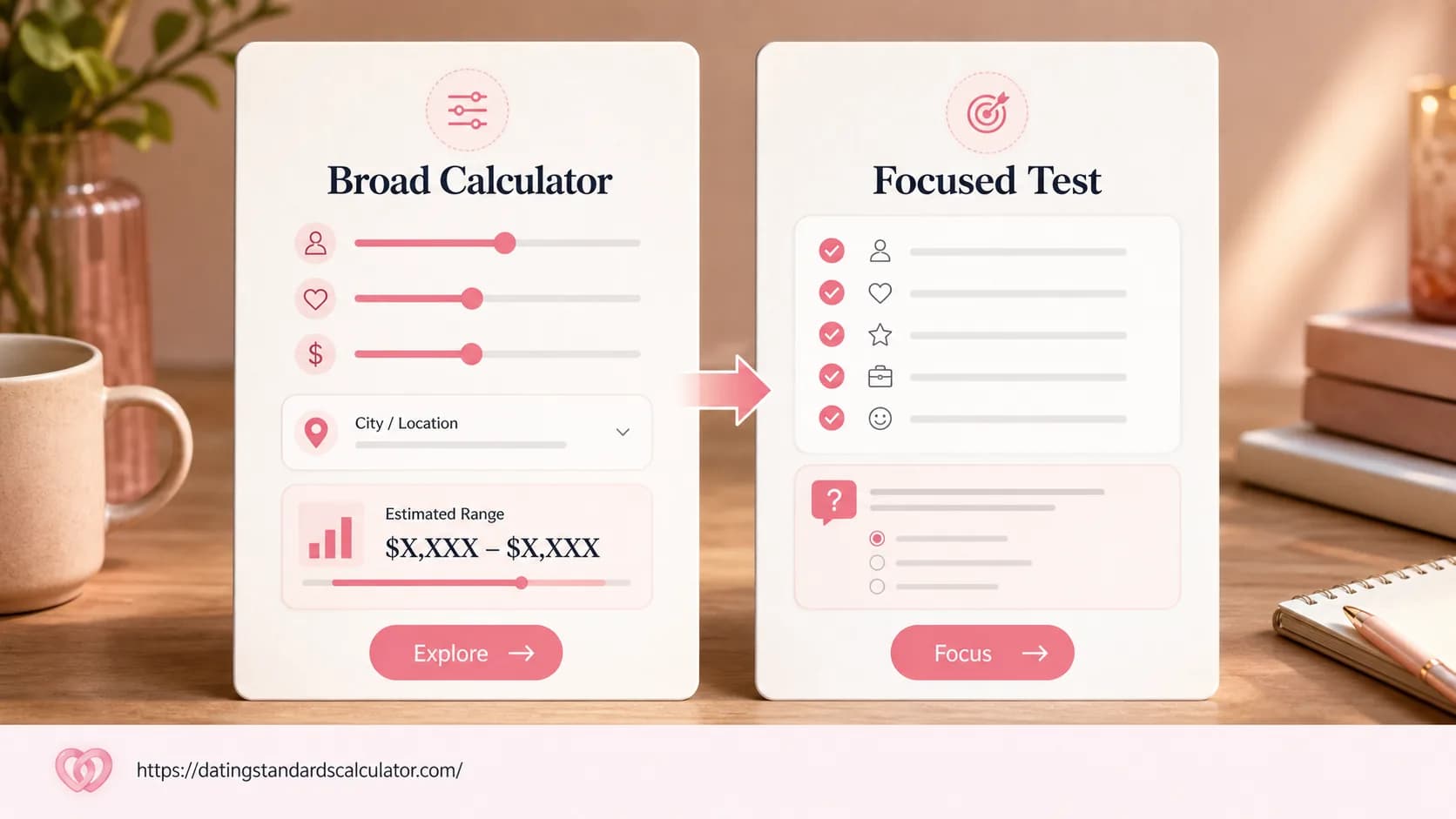
Use the broad calculator when you want to compare filters across location, age and measurable preferences.
Use a focused standards test when your question is already narrowed to one audience or dating scenario.
Check whether the output is a population planning range or preference analysis, then read the stated assumptions before interpreting it.
Explore
Use broad inputs when you want to understand the size of the modeled population range.
Focus
Use a standards test when the question is already tied to a specific perspective.
Interpret
Compare assumptions, then return to real-world context and people.
The data boundary matters
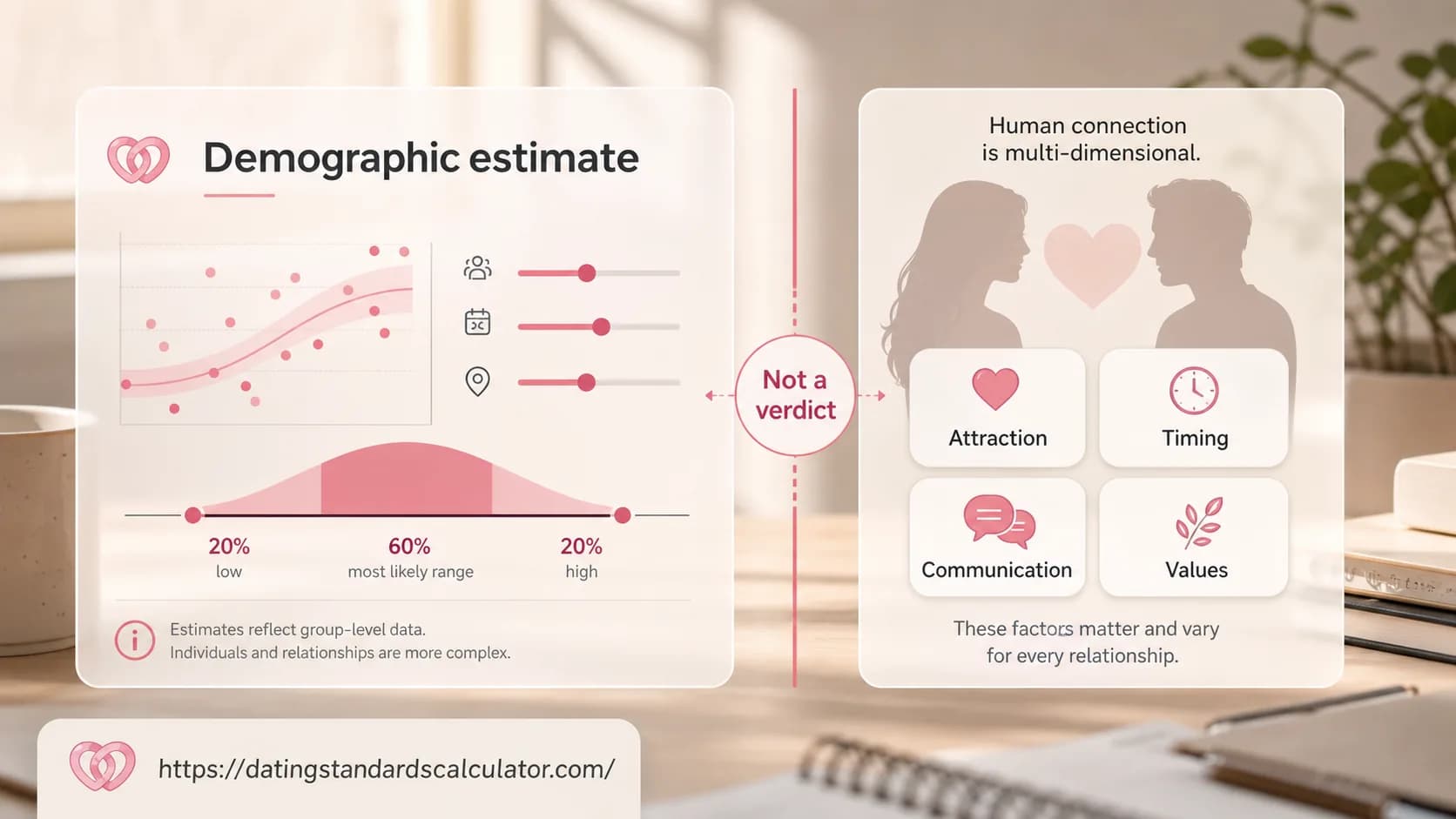
A responsible estimate uses public demographic data where available, labels assumptions, and reports a range instead of pretending to know the exact number of compatible people. It can help you see which measurable filters narrow the starting population, but it cannot observe attraction, timing, communication, values or mutual choice.
That is why the result should be read alongside methodology. The guide on how accuracy works in a dating pool estimate explains data coverage, uncertainty and why exact-sounding scores can be misleading.
The full assumptions and source register are documented in the calculator methodology.
Which test should you use?
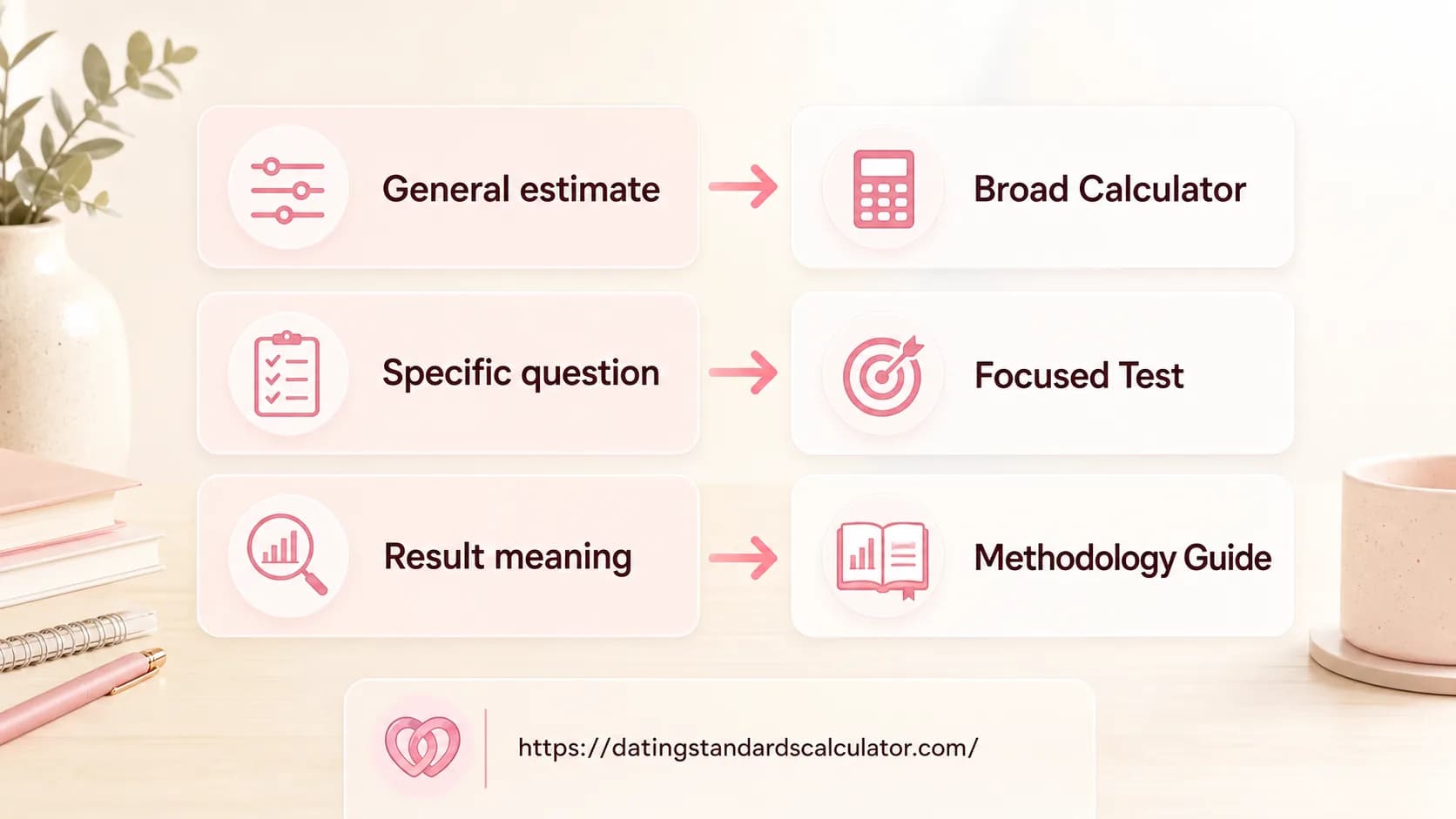
The safest way to use these pages is to match the page to the task. Use the broad calculator for an initial planning estimate. Use the gender-specific tests when your search is already focused. Then read the supporting guides when you want to understand why a filter changed the range.
What to check before trusting a result
Look for a defined reference population, linked sources, explicit model assumptions and an explanation of uncertainty. A precise-looking score alone does not establish accuracy. Our result interpretation guide explains how to read the range and factor breakdown before applying them to your search.
Common questions
What is a dating standards test?
A dating standards test is a guided way to review the partner criteria you want to apply. It can show how selected measurable preferences narrow a reference population, while helping you separate core relationship needs from flexible preferences. It does not determine whether your standards are morally right or predict who you will date.
How do I use a standards test website?
Choose the test that matches the people you are looking for, enter only the criteria you actually plan to use, and change one filter at a time. Read the result with its population definition, data sources and limitations before treating the range as useful planning context.
Is a calculator the same thing as a standards test?
No. A calculator is best for a broad, adjustable planning estimate. A standards test is usually better when the searcher wants a guided check of a specific preference pattern or audience.
Which option should I use first?
Use the broad calculator first when you want a general view of how measurable filters interact. Use a focused standards test when your question is narrower, such as how a specific gender-oriented set of filters changes the estimate.
Can either tool predict whether I will find a partner?
No. Supported locations receive a planning range based on demographic benchmarks and model assumptions. Other locations receive preference analysis. Neither output predicts mutual attraction, availability, chemistry, timing or relationship success.
Does a low result mean my standards are too high?
No. A narrow result means the selected criteria restrict the modeled search. It does not prove that a requirement is unreasonable. Review flexible preferences separately from standards tied to safety, respect and shared life goals.
Does a standards test work outside the United States?
The DS standards profile can be used worldwide. Population estimates depend on a supported country benchmark; unsupported countries receive preference analysis. City adjustments are model assumptions rather than counts of available local partners.
Is a dating standards test a validated psychological assessment?
The DS test is a planning and self-reflection tool, not a validated psychological assessment. The word test does not establish scientific validity: check what a website measures, which sources it uses and how it explains its assumptions.
Start with the right question
Before changing every filter, decide whether you need a broad estimate, a focused test or an explanation of the result.
Open the broad planning calculator