
Are Your Dating Standards Unrealistic?
Blogger: Adam.W | Published 2026.1.5
Contents
I Didn’t Think Mine Were—Until I Looked at the Numbers
For a long time, I thought the phrase “unrealistic dating standards” was just a polite way of telling people to lower their expectations.
It sounded dismissive. Almost insulting.
After all, wanting attraction, stability, and shared values doesn’t feel unreasonable.
Most people I know would say the same thing: “I’m not asking for perfection—just the basics.” But at some point, I started noticing a pattern.
Smart, emotionally healthy people—people who genuinely wanted relationships—kept running into the same wall. Dates went nowhere. Apps felt exhausting. Conversations fizzled out for reasons no one could fully explain. That’s when I stopped asking “Are my standards too high?”
And started asking a different question: How rare is the person I’m actually describing?
The Problem Isn’t Wanting Too Much — It’s Not Seeing the Trade-Offs
Most dating advice treats standards as a moral issue.
You’re either:
- too picky
- or not picky enough
But that framing misses something important. Dating standards are not just preferences. They’re filters. And filters always remove options, whether we notice it or not.
The strange thing is that each individual preference usually feels harmless on its own.
Age range? Reasonable.
Lifestyle compatibility? Makes sense.
Physical attraction? Of course. The trouble starts when those preferences quietly stack together.
Not dramatically. Not intentionally. Just… gradually.
Why Our Intuition Fails Here
I didn’t immediately realize how bad humans are at estimating probability. Especially when emotions are involved.
Social media doesn’t help. Neither do dating apps.
When you scroll through hundreds of profiles or watch curated lives online, it becomes easy to believe that certain combinations are common—when statistically, they’re not.
What surprised me most wasn’t how high people’s standards were.
It was how confidently they assumed those standards were realistic. No one ever sat down and did the math.
The Moment That Changed How I Looked at This
At first, I resisted turning dating into numbers. It felt cold. Reductionist. Almost disrespectful to something as personal as relationships.
But curiosity won.
So I started breaking preferences down—not to judge them, but to understand their impact.
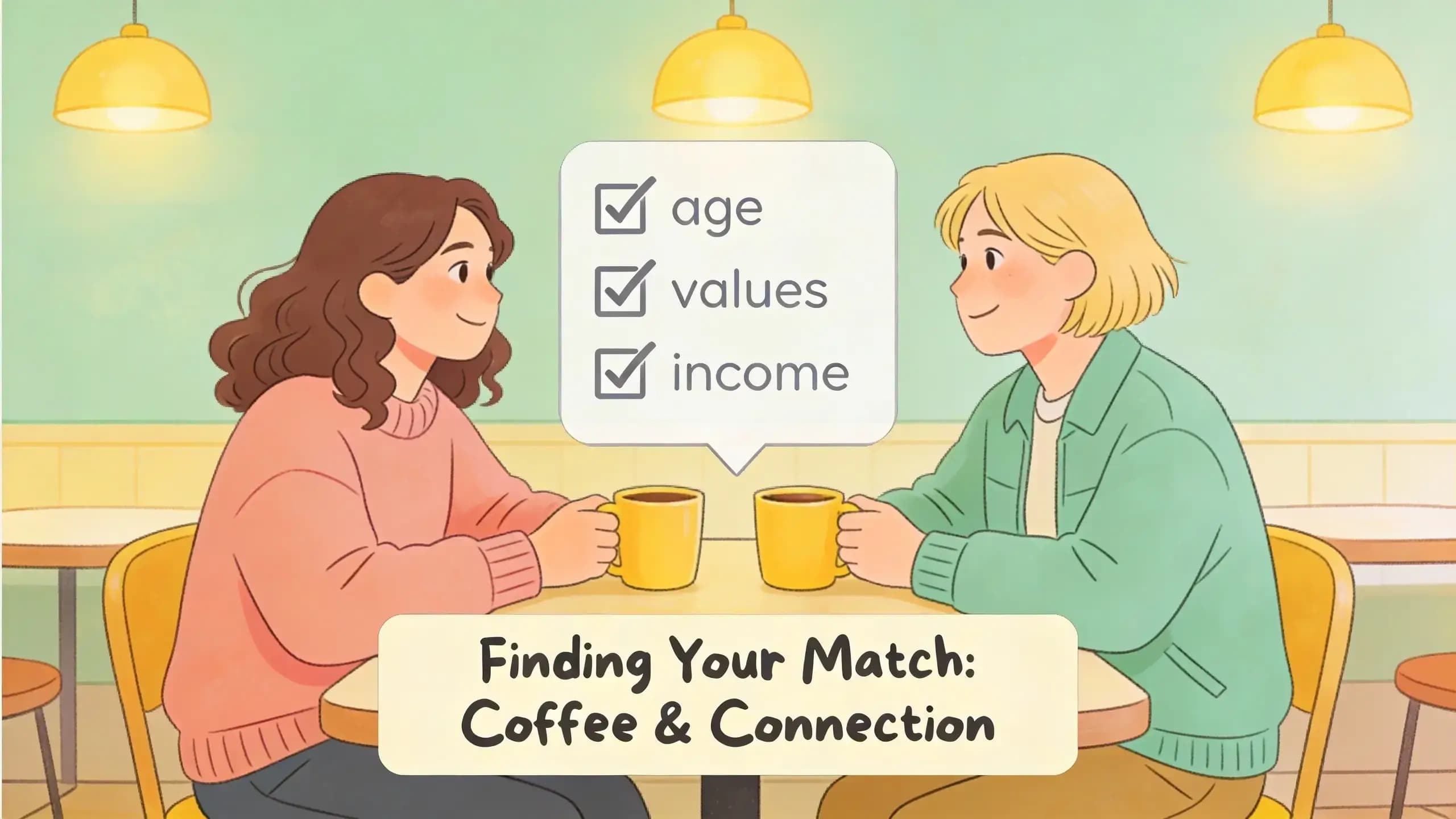
What stood out wasn’t age or height. It was income. In several cases, adjusting income expectations by a relatively small amount changed the size of the dating pool more than any other factor. More than age. More than physical traits.
That result felt uncomfortable. Which, in hindsight, was probably the point.
What a Dating Standards Calculator Is (and What It Isn’t)
This is where people often get the wrong idea.
A Dating Standards Calculator is not a tool that tells you what you should want. It doesn’t shame you. It doesn’t give advice. And it definitely doesn’t decide who you should date.
All it really does is answer a question most people never pause to ask:
“If I combine all of my criteria, how many people are realistically left?”
Seeing that number can be grounding. Sometimes it’s reassuring. Sometimes it’s sobering.
Often, it’s both.
Realism Is Not the Same as Settling
This distinction matters more than people admit.
Settling means ignoring your core needs.
Realism means understanding consequences. When someone realizes their ideal partner represents 0.3% of the population, they don’t automatically lower their standards. Many don’t change them at all.
But they do stop blaming themselves—or others—for outcomes that were statistically unlikely from the start.
That shift alone changes how dating feels.
Why This Conversation Feels So Uncomfortable
Talking about dating standards touches ego, identity, and hope. Numbers have a way of cutting through stories we tell ourselves—sometimes gently, sometimes not.
I don’t think data should run your love life.
But I’ve also seen what happens when people rely entirely on intuition in an environment designed to distort it.
Ignoring probability doesn’t make it disappear.
If You’re Curious, Not Convinced
You don’t need to change your standards.
You don’t need to justify them either. But if you’ve ever wondered why something feels so difficult—or why outcomes don’t match effort—it might be worth seeing the numbers once.
A Dating Standards Calculator won’t give you answers about love.
It might just give you clarity about the odds you’re working with. And sometimes, that’s enough to change the way the whole process feels.
For a data-based guide on what the percentage actually means and how to read it without panic, see Are Your Dating Standards Too High?